The SSL Checker checks whether a valid certificate exists for a domain, how long it is still valid, and which certificate authority issued it. This allows you to identify at an early stage whether browser warnings, trust issues, or impending outages could arise due to an expiring or faulty certificate.
The tool is particularly useful for ongoing quality checks, project acceptance, hosting changes, and support cases related to HTTPS. Instead of only testing whether a site is basically accessible via HTTPS, you receive a compact certificate overview with the most important information for technical and organizational decisions.
How the tool works in practice
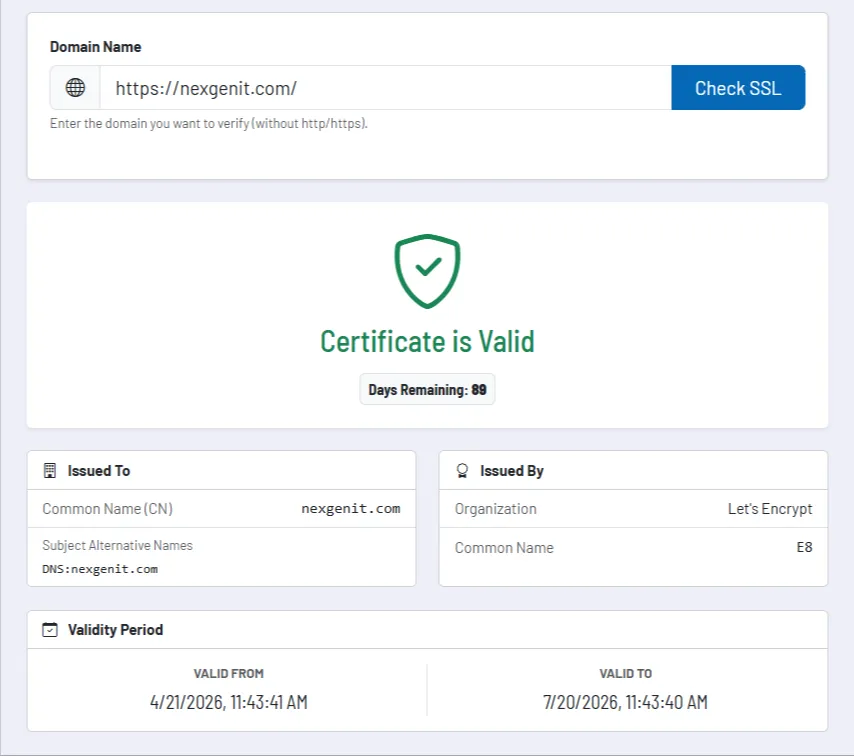
You enter the domain without protocol and start the check. The tool reads out the certificate information and condenses it into a clear status. This lets you see at a glance whether the certificate is valid, about to expire, or already expired or faulty.
Afterward, you receive the most important certificate details in a structured form. These include the common name, any alternative domain names, the issuing organization, and the period from valid from to valid until. This transparency is especially valuable for multi-domain certificates or unclear hosting setups.
In addition, the tool shows the remaining days until expiration. This makes it easy not only to detect acute errors, but also to proactively react to certificate renewals or problematic automations before users see a warning in their browser.
Core functions and key views
- The status display differentiates between a valid certificate, an upcoming expiration, and a problematic certificate state.
- Subject data such as common name and alternative domain names help verify whether the certificate actually matches the intended domain landscape.
- The issuer details make it visible which certificate authority provided the certificate.
- The validity data and remaining lifetime are particularly helpful for maintenance routines, hosting checks, and monitoring-related inspections.
Recommended workflow
Do not only check your main domain, but also important subdomains, application endpoints, and landing pages if they run on separate systems or certificate chains. In practice, many HTTPS problems do not occur on the main site, but on additional services that are checked less frequently.
If a certificate is about to expire, you should not only initiate the renewal, but also review the renewal logic. This ensures that the current problem does not reoccur in the next cycle. The tool is therefore suitable not only for error detection, but also for quality control of your certificate processes.